


(Video) Carlos Alcaraz Instructed to Remove the Whoop Band Before his Australian Open Clash With Tommy Paul
Carlos Alcaraz will play Alex de Minaur in the Australian Open quarterfinals.
 Follow Us
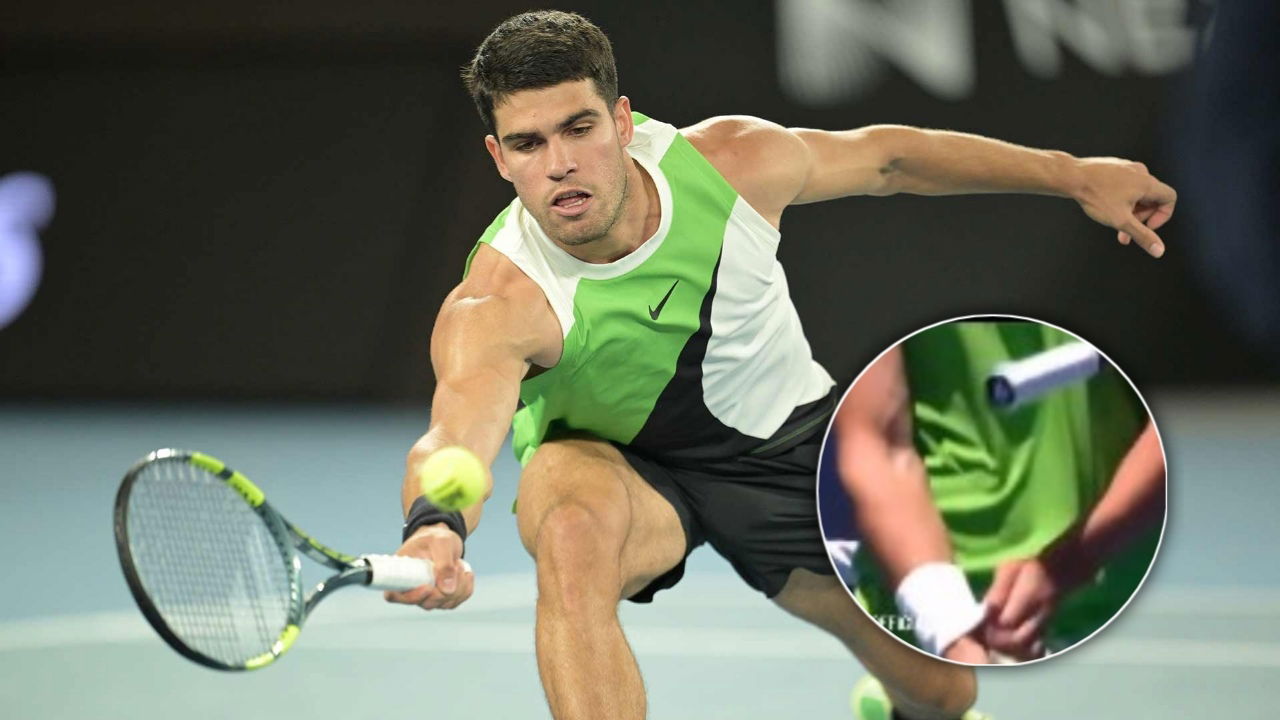
Carlos Alcaraz was instructed to remove the band (via ATP Tour)
The Australian Open is always good for a bit of drama, but usually, that drama happens strictly between the baselines. This week, however, the headlines surrounding Carlos Alcaraz are split between his undeniable brilliance with a racket and a weirdly specific dress code violation involving his wrist.
The 22-year-old Spaniard cruised into the quarterfinals after a straight-sets dismantling of Tommy Paul. But the chatter after the match wasn’t just about his forehand; it was about the moment tournament officials stepped in and asked him to remove his WHOOP fitness tracker.
In today’s AO match, Umpire asked Alcaraz to remove his whoop watch 🤯
— SK (@Djoko_UTD) January 25, 2026
All the athletes across sports use whoop as a tracking device and use the data in their recovery
Why are tennis players not allowed to wear tracking devices.. pic.twitter.com/h7xMw8UAHY
Alcaraz is playing some scary good tennis. His match against Tommy Paul was billed as a potential stumbling block, but the Spaniard turned it into a showcase. Winning in straight sets at a Grand Slam is never “easy,” per se, but Alcaraz makes it look that way.
His movement around the court was electric. He was chasing down balls that had no business being returned and firing winners from defensive positions. For fans watching, it was a reminder of why he is already a Grand Slam champion at such a young age.
The “No Tech” rule: What actually happened?
Mid-tournament, officials approached Carlos Alcaraz with a clear instruction: the band had to go. For those outside the pro sports bubble, this might seem petty. It’s just a strap? It doesn’t even have a screen to receive text messages or coaching tips.
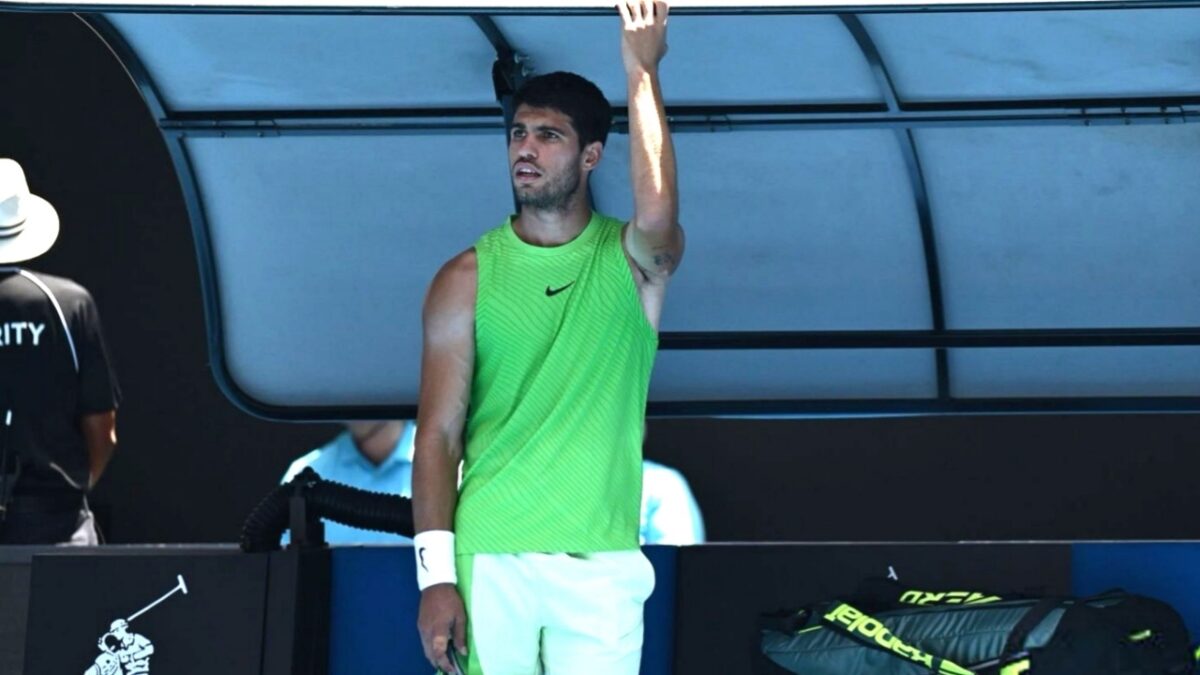
But tennis governing bodies are notoriously paranoid about “outside assistance” and real-time data usage. The fear is that even biometric data could, in theory, be transmitted to a coach’s box, who could then signal the player to change tactics based on their physical output.
Alcaraz isn’t the only one getting flagged for this. Earlier in the week, defending champion Aryna Sabalenka faced the exact same situation. She was also asked to remove her tracker. This proves the tournament officials aren’t targeting Alcaraz specifically; they are just drawing a hard line on equipment.
For a player like Alcaraz, data is crucial for training. Knowing exactly how much strain his body is under during a five-set thriller could help his team adjust his recovery plan for the next match. By banning the device during the match, the tournament effectively creates a “blackout” period for that data.
What this means for the quarterfinals
So, where does this leave Alcaraz? In a pretty good spot, actually. While he might be annoyed about losing his data tracking for the duration of the match, it clearly hasn’t affected his focus. He complied with the rule without throwing a tantrum, removed the device, and proceeded to win the match.

He now prepares for the quarterfinals against home favorite Alex de Minaur. Neither player has lost a single set in the Australian Open so far, and De Minaur has established a reputation for being one of the fastest players on the circuit.
Hence, Alcaraz would know he would be playing a player with a similar module to his. The duo has played multiple times in the past year, including the Rotterdam 2025 final, where the Spaniard won in three sets to register his first title of the season.
Also Read: Novak Djokovic Apologizes to the Ball Kid After Near Disqualification at the Australian Open



/techfirstnow/media/agency_attachments/kATjCXskQdJKkXN0OuqW.png)