

Carlos Alcaraz Makes Interesting Roger Federer Comment While Feeling Targeted By the Demanding Nature of Rivals
Carlos Alcaraz maintains a 14-0 perfect record to start the 2026 season.
 Follow Us
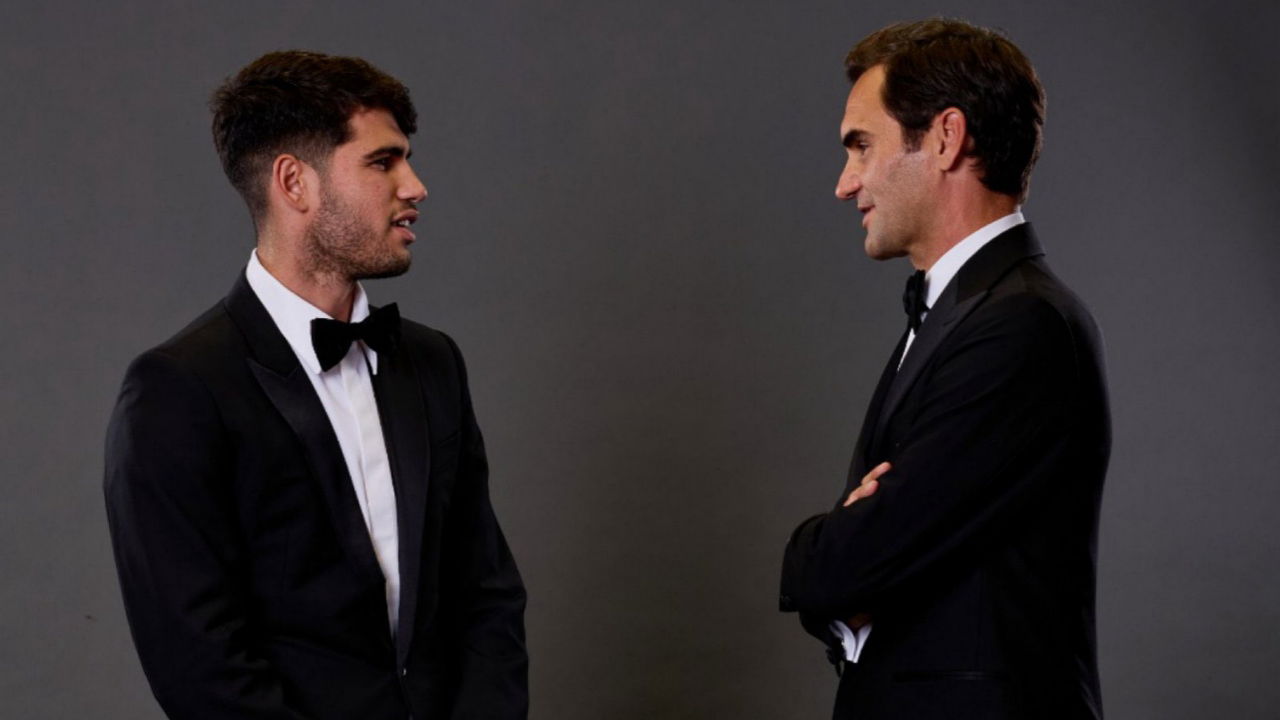
Carlos Alcaraz, Roger Federer (Image via X/alcaraz archive)
- Carlos Alcaraz feels the pressure of opponents raising their game against him, likening it to facing Roger Federer every match.
- Despite the challenges, Alcaraz continues to win, boasting 14 straight victories and 7 Grand Slam titles.
- His adaptability and tactical intelligence allow him to recalibrate and dominate matches, even after losing the first set.
Carlos Alcaraz has a problem most tennis players would kill for. He’s so good that every guy he faces shows up playing the best tennis of his life.
After beating Arthur Rinderknech 6-7(6), 6-3, 6-2 at Indian Wells on Monday, Alcaraz didn’t walk off court looking like a man celebrating his 14th straight win. He walked off looking like someone who’d just survived another firefight; he wasn’t supposed to need surviving. Alcaraz said in his post-match press conference:
To be honest, I just sometimes get tired of playing Roger Federer every round. Sometimes just feel like, yeah, they playing really an insane level. I don’t know if I’m feeling not the right way, but I feel it’s just against me all the time. If they play like, you know, that level every match, they should be higher in the ranking. But, you know, obviously is something that concerns me. When I’m just playing, I think about that.
When Alcaraz brings up Federer, he’s not being dramatic. He’s describing a specific and exhausting reality. The Swiss man spent the back half of his career dealing with exactly this: opponents who circled matches against him on the calendar months in advance, who dialed up their intensity to eleven and left absolutely everything on the court. Alcaraz, at 22, is already living that life.
“ I’m get tired to play roger federer every round.” CARLOS 😭😭😭😭 pic.twitter.com/jWamHABqjT
— f #7inMelbourne (@fvaeey) March 10, 2026
Every player in the draw has studied his game. Every coach has a plan. Every opponent walks on court with something to prove. And the truly wild part is that Alcaraz keeps winning anyway with 14 straight in 2026, an unbeaten on the season, and 7 Grand Slam titles already on the shelf.
Carlos Alcaraz keeps winning, but nothing comes easy
That first set told the whole story. Arthur Rinderknech, ranked No. 26, a big-serving Frenchman who has never beaten Carlos Alcaraz in six attempts, pushed the world No. 1 to a tiebreak and took it.
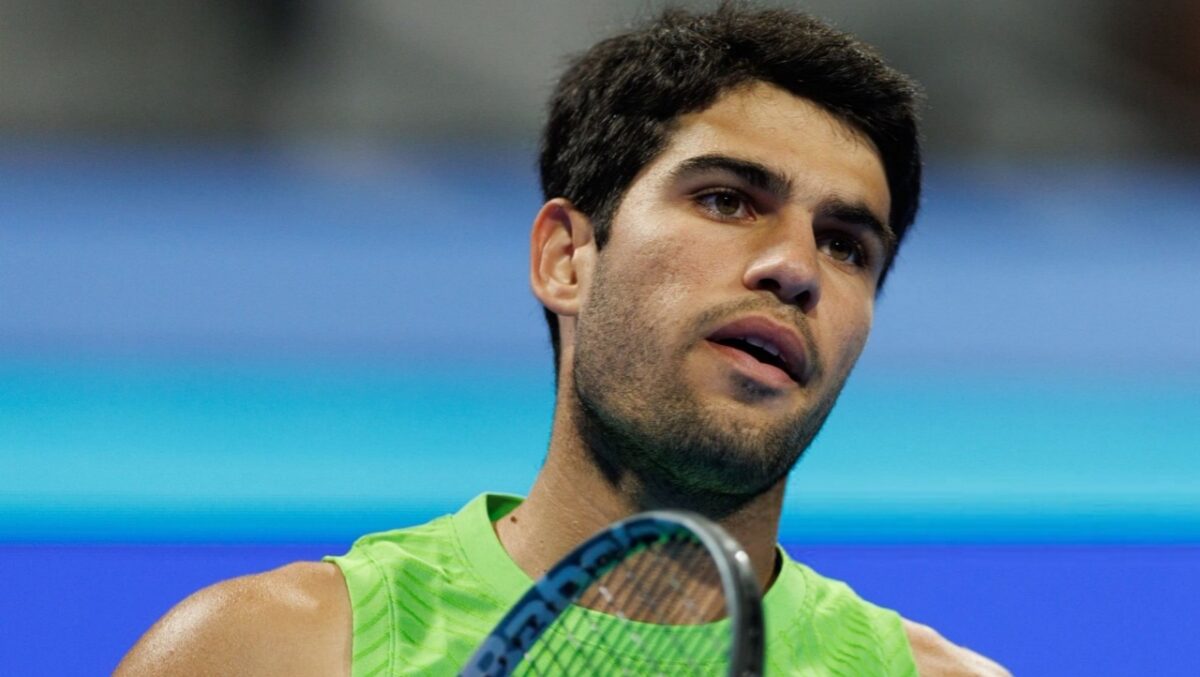
The crowd at Indian Wells was buzzing. Not because anyone genuinely thought Rinderknech was going to pull off the upset, but because of the reminder: even on a routine Monday, Alcaraz earns every single point.
He’d been here before. Rinderknech pushed him in Doha earlier this year, too. The guy just refuses to play scared, and Alcaraz, to his credit, respects that. But respect doesn’t mean mercy. After dropping that first set, Alcaraz flipped a switch.
In the second set, he broke serve and leveled. In the third set, he was flat-out dominant, clean, controlled, and clinical. The kind of tennis that reminds everyone why he’s sitting at the top of the rankings.
What Indian Wells looks like from here
Getting through the first few rounds at a Masters 1000 event is one thing. The last 16 is where tournaments start to show their teeth. Carlos Alcaraz will face tougher opponents from here, with Casper Ruud his next opponent in the desert. The bracket isn’t going to get easier.

But if the first two weeks of his 2026 season have shown the fans anything, it’s that Alcaraz isn’t just riding a hot streak. He’s playing with a maturity and tactical intelligence that sets him apart.
When Rinderknech took that first set, lesser players get tight. Alcaraz recalibrated and adjusted his game plan, taking the match apart over the next two sets.
That adaptability is what makes him genuinely dangerous. A player can game-plan for his forehand. He can try to keep the ball away from his backhand. He can serve big and try to disrupt his rhythm. And after all that, he still might be shaking the Spaniard’s hand at the net, cracking jokes about not wanting to see him again.
Also Read: Amanda Anisimova Lauds Jessica Pegula for Her Role as WTA Council Leader
Fahad Hamid
(1769 Articles Published)