

“Biggest Highway Robbery” – Tennis Fans Slam Controversial Line Calls During Joao Fonseca vs. Casper Ruud Encounter at Roland Garros
Joao Fonseca is currently leading the match against Casper Ruud.
 Follow Us
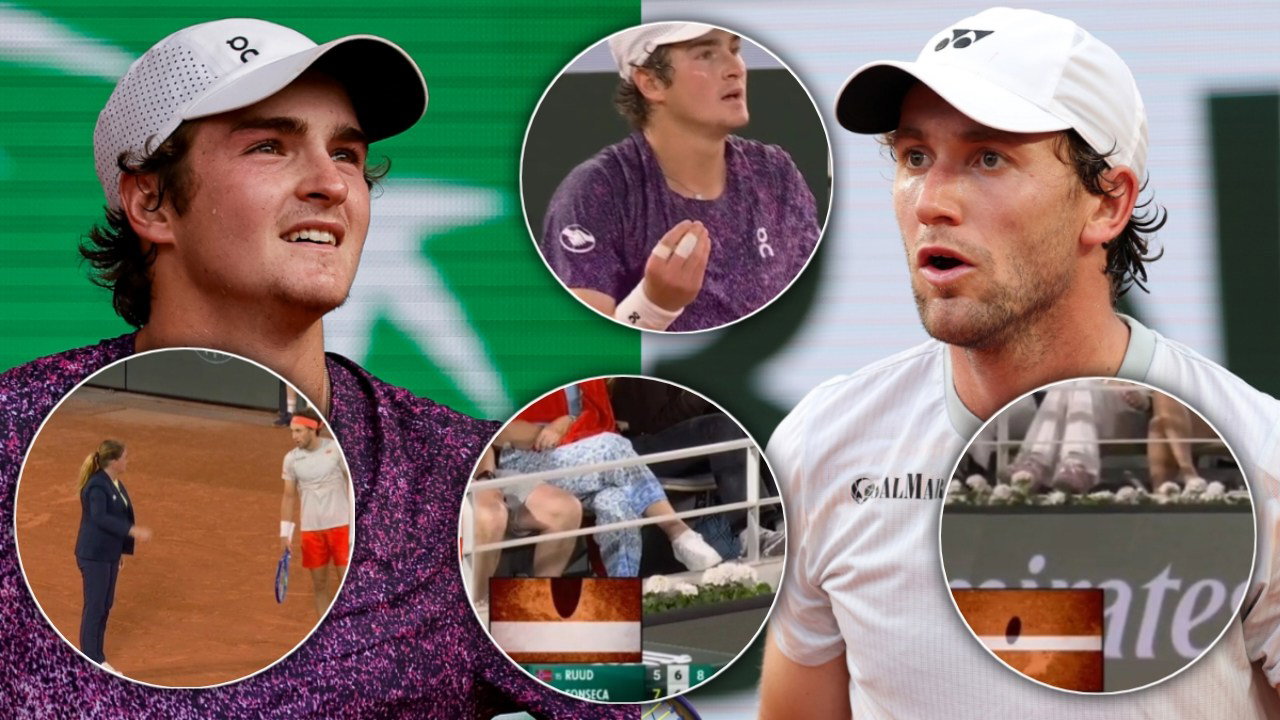
Joao Fonseca Casper Ruud (via Tennis Letter)
- João Fonseca's match against Casper Ruud at Roland Garros was marred by controversial line calls during critical moments.
- Fans and commentators criticized the lack of electronic line calling, calling for its implementation on clay courts.
- The officiating issues highlighted ongoing tensions at Roland Garros regarding accuracy and the reliability of traditional line judging.
Joao Fonseca found himself at the center of a heated officiating debate during his fourth-round matchup against Casper Ruud at the 2026 French Open, as disputed line calls and a vocal crowd nearly altered the outcome of critical set points.
The Brazilian phenom, riding high after his stunning comeback victory over Novak Djokovic, faced off against the experienced Norwegian on Court Philippe-Chatrier in what was billed as a generational showdown. But instead of pure tennis, the conversation quickly shifted to the human element of line judging on clay, where Roland Garros remains the last major holdout against full electronic line calling.
Total mess of line calls during the João Fonseca and Casper Ruud match at Roland Garros
— The Tennis Letter (@TheTennisLetter) May 31, 2026
João hit a forehand on Casper’s set point that was not called out, but someone from the crowd yelled and it sounded like an out call.
The call did not come from the umpire. She comes to… pic.twitter.com/TiY0iu29qX
The situation developed in the second-set tiebreak. According to eyewitness accounts and broadcast footage circulating widely, Fonseca ripped a forehand on Ruud’s set point that line judges initially left uncalled. A spectator’s yell mimicked an “out” call, creating audible confusion.
The chair umpire intervened, checked the ball mark on the red clay, and ruled it good. Yet Hawk-Eye graphics on television painted a different picture, showing the ball landing marginally out. Moments later, on Fonseca’s own set point, a shot called out by officials appeared clearly in on replay.
Tennis fans demand change in technology for Clay Court Tennis
This back-and-forth left fans, players, and commentators shaking their heads. At any other tournament with reliable electronic systems, Casper Ruud might have pocketed that set and shifted the momentum entirely.

Here are some of the reactions:
Biggest highway robbery I’ve ever seen
— Sam Schwartz (@samschwartz71) May 31, 2026
Also is crazy that neither player has any idea what just happened. Only the commentators and fans have seen the hawkeye
They need electronic line calling asap .. enough of these line umpires
— Yash Rathi (@YashRathi1845) May 31, 2026
Scandalous by the umpire to not relay the 8-7 call and instead just giving the point to Fonseca to make it 8-8… yet she had the 9-8 Fonseca point replayed on literally the exact same scenario of overturning a call.
— Preston (@txdburner) May 31, 2026
Get rid of the line judges. There are something like 10 incorrect calls every match
— Terri (@Terri6455841932) May 31, 2026
FCKING BULLSHIT fraudulent garros this year is maddening
— 𝓛𝓲𝓪𝓶 🔱 (@psilitennis) May 31, 2026
French is going on. No ELC is absolutely insane in 2026.
— Testa al '27 (@mgpg07) May 31, 2026
Genuinely such an embarrassment on what has been a great match. Completely unfair to Casper who objectively won the set
— Philly Fan (@TopSimmons) May 31, 2026
Controversy like this is exactly why line-calling tech consistency matters at this level.
— HustleWithHasnain⚡️ (@Hasnain5567) May 31, 2026
Line umpires have to be replaced, this is crazy.
— Susi Mar (@susimar0) May 31, 2026
These incidents highlight the ongoing tension at Roland Garros over officiating. While clay allows umpires to physically inspect ball marks, the process is far from foolproof. Marks can smudge, interpretations vary under pressure, and crowd noise adds another layer of chaos. Fonseca, just 19, has already shown remarkable poise this fortnight, but such moments test even the steadiest nerves.
For Ruud, a two-time finalist here with a deep clay pedigree, these calls represented potential turning points in a match where experience was supposed to count. The Norwegian had just survived his own epic five-setter against Tommy Paul, saving match points in a grueling battle. Now, facing the hottest young gun in the game, every point carried extra weight.
Broader tournament picture
This matchup pitted Casper Ruud’s consistency and clay-court savvy against Joao Fonseca’s explosive power and fearless shot-making. Fonseca had the edge in faster, lower-bouncing conditions, but no one anticipated the officiating drama stealing the spotlight.
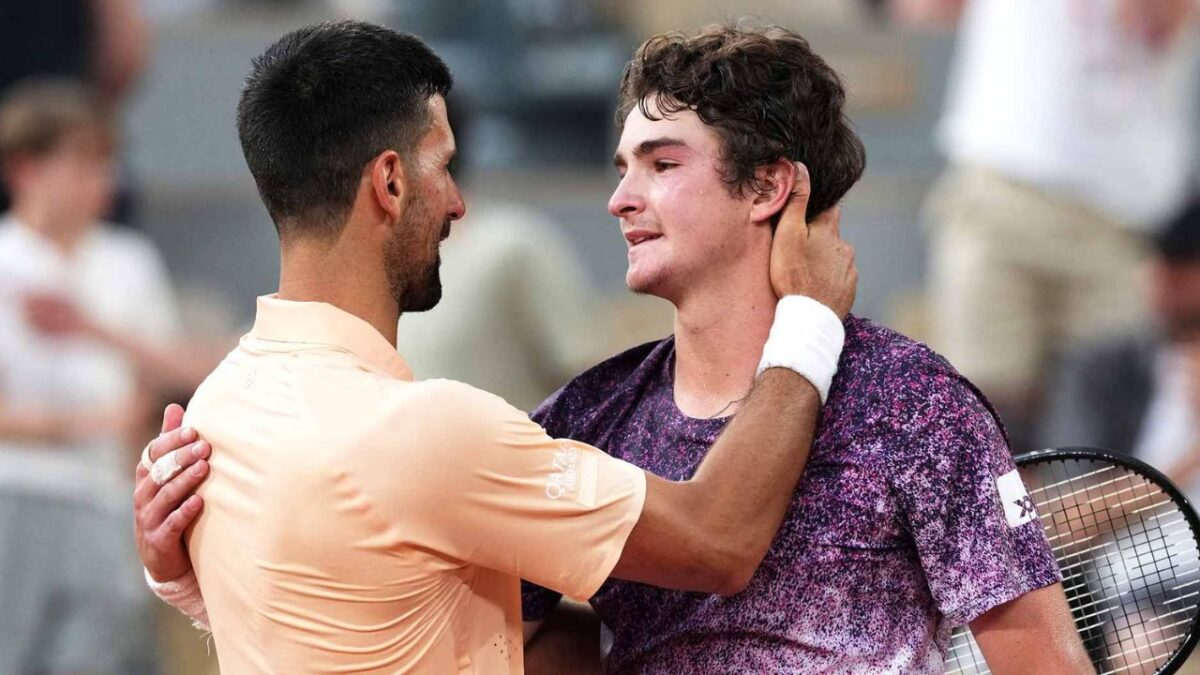
Fonseca entered the round of 16 fresh off one of the biggest upsets in recent French Open history, coming back from two sets down to oust Djokovic in nearly five hours of tennis that had Paris buzzing. Ruud, meanwhile, ground out a comeback of his own against Paul on Suzanne-Lenglen. Both men arrived battle-tested, legs heavy, but mentally forged in the fire of best-of-five sets.
The absence of electronic line-calling at Roland Garros has been a talking point throughout the tournament. While other Slams and most ATP events have embraced technology to improve accuracy and the pace of play, Paris clings to tradition.
Umpires still climb down from their chairs to inspect marks, line judges call balls in real time, and players retain the right to challenge. It adds theater, but also controversy, especially when TV technology tells a conflicting story.
Fahad Hamid
(1769 Articles Published)