


Iga Swiatek Makes Carlos Alcaraz Admission While Discussing Technical Changes to her Game After Australian Open Exit
Iga Swiatek and Carlos Alcaraz both don't have an Australian Open title to their name yet.
 Follow Us
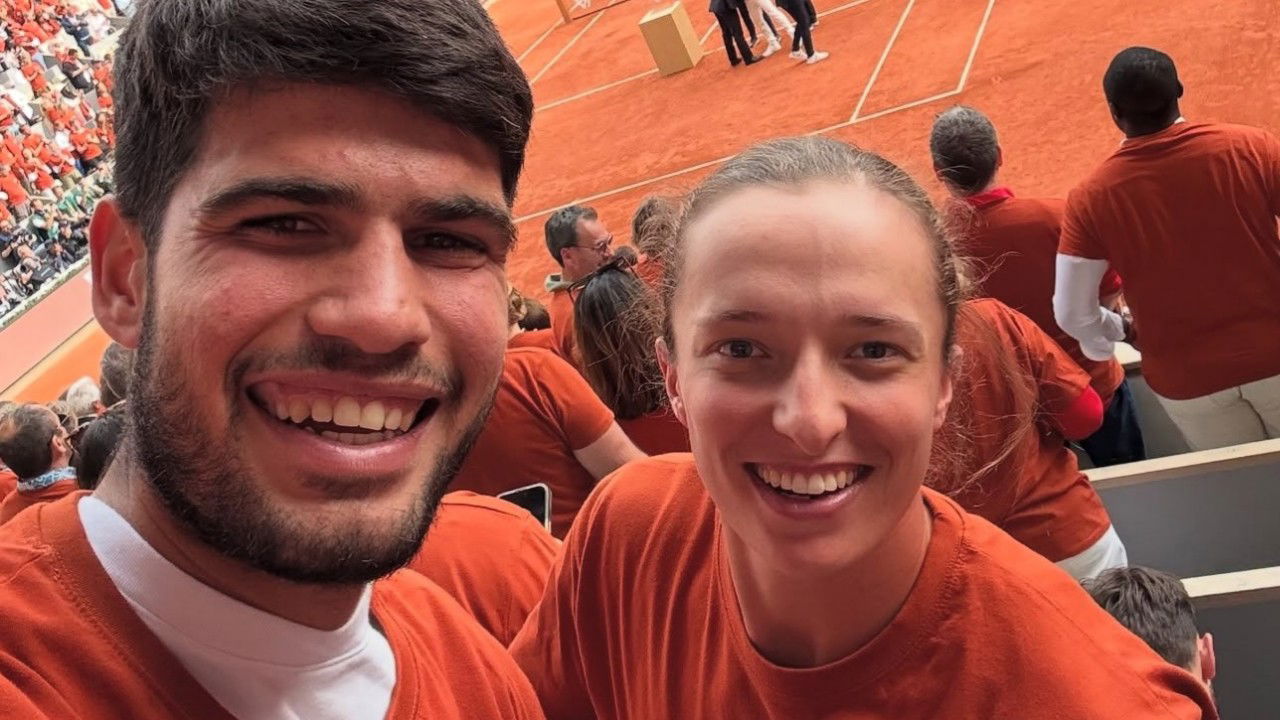
Carlos Alcaraz and Iga Swiatek (via X)
🔍 Explore this post with:
It’s the kind of loss that lingers. When someone is the World No. 2, expectations aren’t just high; they are astronomical. For Iga Swiatek, the 2026 Australian Open was supposed to be another step toward cementing her legacy—perhaps even the final piece of the puzzle for a Career Grand Slam. Instead, it ended in the quarterfinals against a formidable Elena Rybakina.
But looking at the post-match press conference, it wasn’t the loss itself that grabbed the headlines. It was Swiatek’s brutal honesty about why it happened. The Polish superstar didn’t blame the heat, the crowd, or bad luck. She pointed the finger squarely at her own game, specifically a technical issue that seems to be haunting her: the serve. Swiatek said in her Australian Open press conference:
Some technical stuff that have been pretty tough for me to have a smooth process in terms of changing them. I see Carlos for example changing his serve every year. For me it’s like one little thing takes a much longer time. There’s some stuff on the serve I want to change. I already changed that in the preseason but then the matches come and you don’t have that much time to think about this. You don’t want to think about these kind of details when you play. Then it comes back to the old patterns. Basically I’ll focus on that and I’ll see from there.
Tennis fans know that styles make fights, and Rybakina has always been a tricky matchup for Swiatek. But this loss felt different. It wasn’t just that Rybakina played well; it was that Swiatek seemed trapped by her own mechanics.
One of the most interesting comparisons to come out of this tournament is the contrast between Swiatek and her male counterpart in the discussion of dominance, Carlos Alcaraz. Alcaraz is known for his ability to tinker with his mechanics on the fly.
This is evident as he arrived at this year’s Australian Open with an entirely different service motion. Swiatek, by her own admission, doesn’t operate that way. She is a player who relies heavily on rhythm and structure.
The quest for the Career Grand Slam
The stakes for fixing these issues couldn’t be higher. The Australian Open exit means the wait for a Career Grand Slam continues.
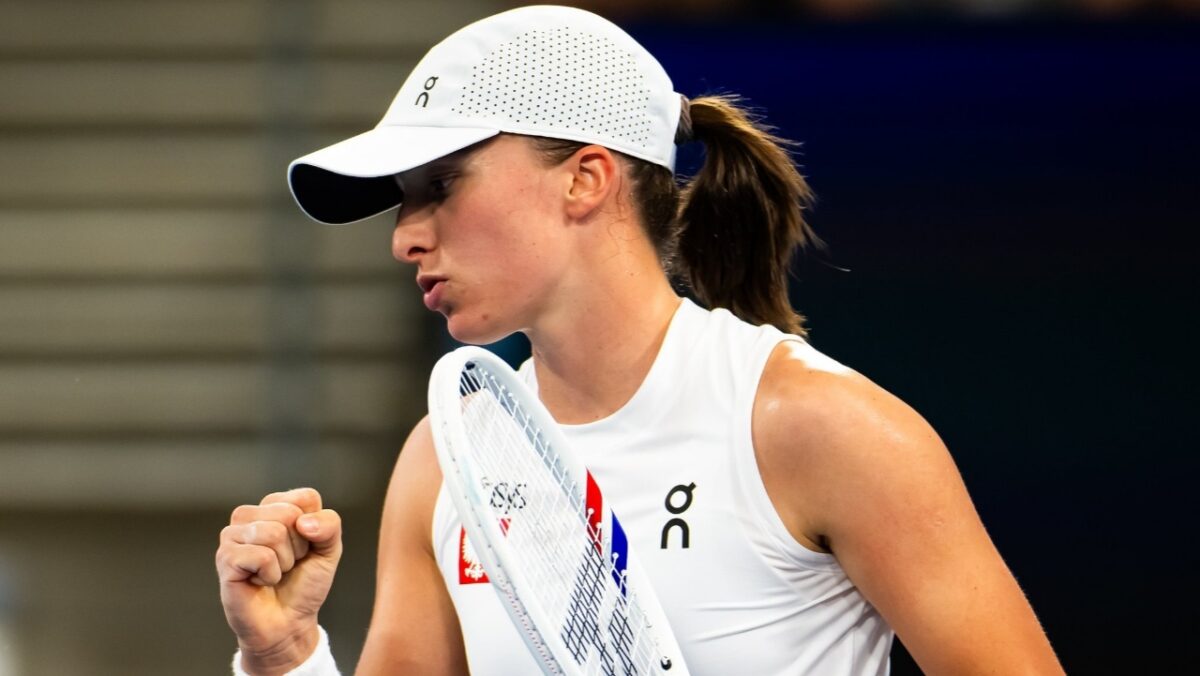
While Iga Swiatek has proven she can win on grass (Wimbledon 2025) and obviously on clay, the hard courts in Melbourne require a specific kind of serving consistency that she hasn’t quite locked in yet. Her best result in Melbourne is the semifinal, where she lost to Madison Keys despite having a match point last year.
The serve is the only shot in tennis that a player has complete control over. On fast hard courts, if the serve is attackable, the opponent is immediately on the back foot. Elena Rybakina, with her massive delivery, highlighted exactly why Swiatek needs to shore up this part of her game.
What’s next for Iga Swiatek in 2026?
So, where does the World No. 2 go from here? The immediate sting of the loss will fade, but the work is just beginning.
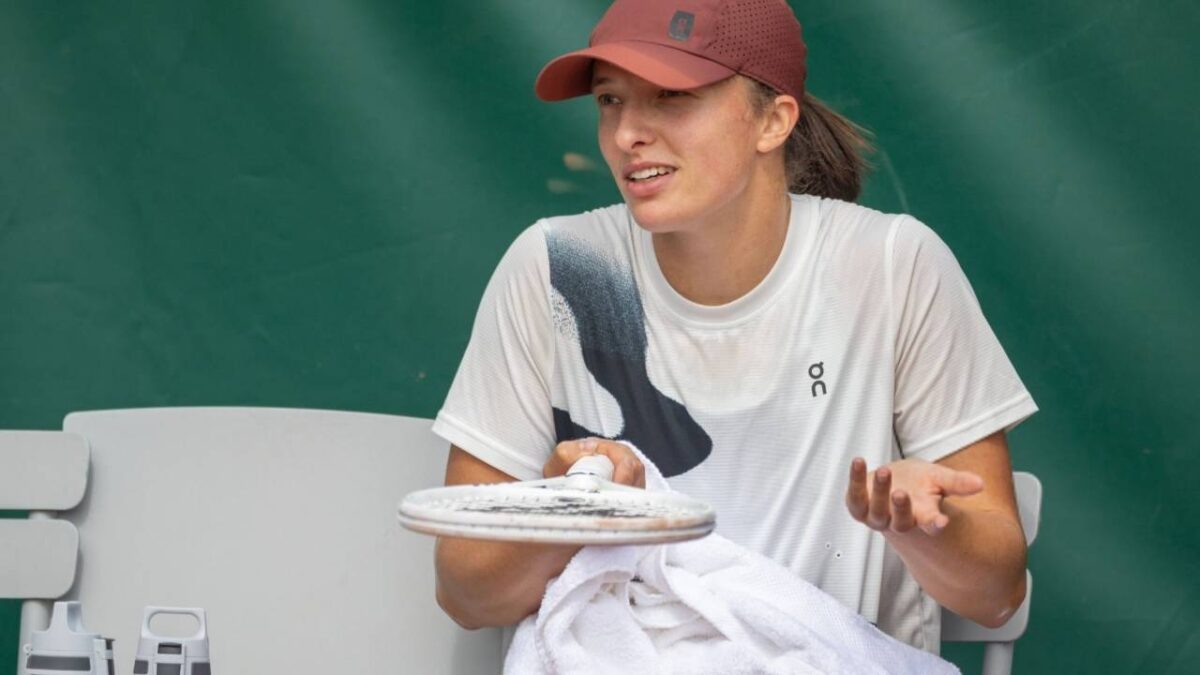
Iga Swiatek has indicated she plans to use the coming weeks to focus on these technical refinements. The goal is to have the new mechanics settled before the tour moves to the “Sunshine Double”—Indian Wells and Miami. These tournaments will be the first real test of whether she can integrate the changes into competitive play without reverting to “old patterns.”
It’s worth remembering that Swiatek is resilient. She broke a 13-month title drought last year by winning Wimbledon and Cincinnati back-to-back. She knows how to bounce back.
The tennis world shouldn’t worry about her drive; they should be watching to see if she can master the technical evolution needed to stay at the summit. Despite winning Wimbledon last year, there is no doubt that clay is still her favorite part of the season.



/techfirstnow/media/agency_attachments/kATjCXskQdJKkXN0OuqW.png)