

Mirra Andreeva Already Hooked to the Grass-Court Season After Roland Garros Triumph
Mirra Andreeva is the first woman born after 2005 to win a Grand Slam title.
 Follow Us
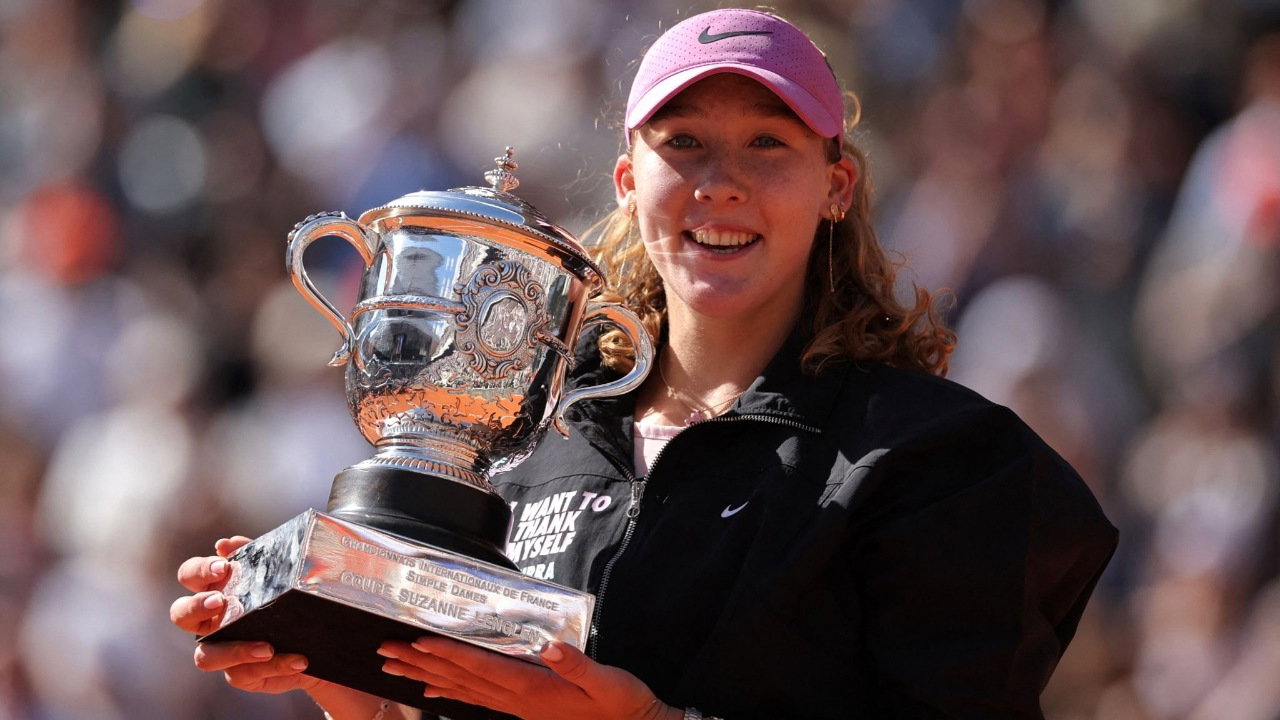
Mirra Andreeva (Image via Sky Sports)
The tennis world witnessed a historic shift on Saturday as 19-year-old Russian sensation Mirra Andreeva captured her first Grand Slam singles title by defeating Poland’s Maja Chwalinska in a high-stakes final at Roland Garros.
Andreeva displayed a maturity far beyond her years on the red dirt of Paris, executing a masterclass in baseline variation, defensive resilience, and tactical brilliance to overwhelm her opponent and claim the Suzanne Lenglen cup.
The newly crowned champion showed no signs of complacency during her post-match media obligations. The international tennis press corps in attendance noted that while most teenage players would be consumed by the immediate celebrations of a maiden Major, Andreeva was already actively looking forward to the technical adjustments required for the upcoming European grass-court swing. Andreeva said in her press conference:
I would say kind of, yes. These feelings are something extra special. Honestly, now I’m already thinking of how I’m gonna prepare for the grass season, how I’m gonna play grass tournaments. I feel like this thing is a little bit addicting and I really want to do my best to experience all of this for the second time.
Mirra Andreeva says she’s already thinking about preparing for the grass season, ‘I feel like this thing is a little bit addicting’
— The Tennis Letter (@TheTennisLetter) June 6, 2026
"Now that you've got one of these trophies, do you feel excited and kind of ready to be pushing for these regularly and adding to your trophy… pic.twitter.com/32T73ftQvb
By lifting the trophy in Paris, Andreeva has shattered records that have stood for over thirty years, becoming the youngest woman to win the French Open since Monica Seles in 1992. In an era of women’s tennis often defined by rapid shifts in momentum and unexpected champions, Andreeva’s dominant run throughout the fortnight signals the rise of a consistent, mentally formidable force capable of winning on the sport’s grandest stages.
Breaking down Mirra Andreeva’s historic Roland Garros run
The path to the title was anything but easy, requiring Mirra Andreeva to navigate a draw filled with seasoned veterans and powerful baseline hitters. Throughout the fortnight, she showcased a lethal combination of tactical intelligence and physical stamina, refusing to beat herself and forcing her opponents into uncomfortable positions all over the court.
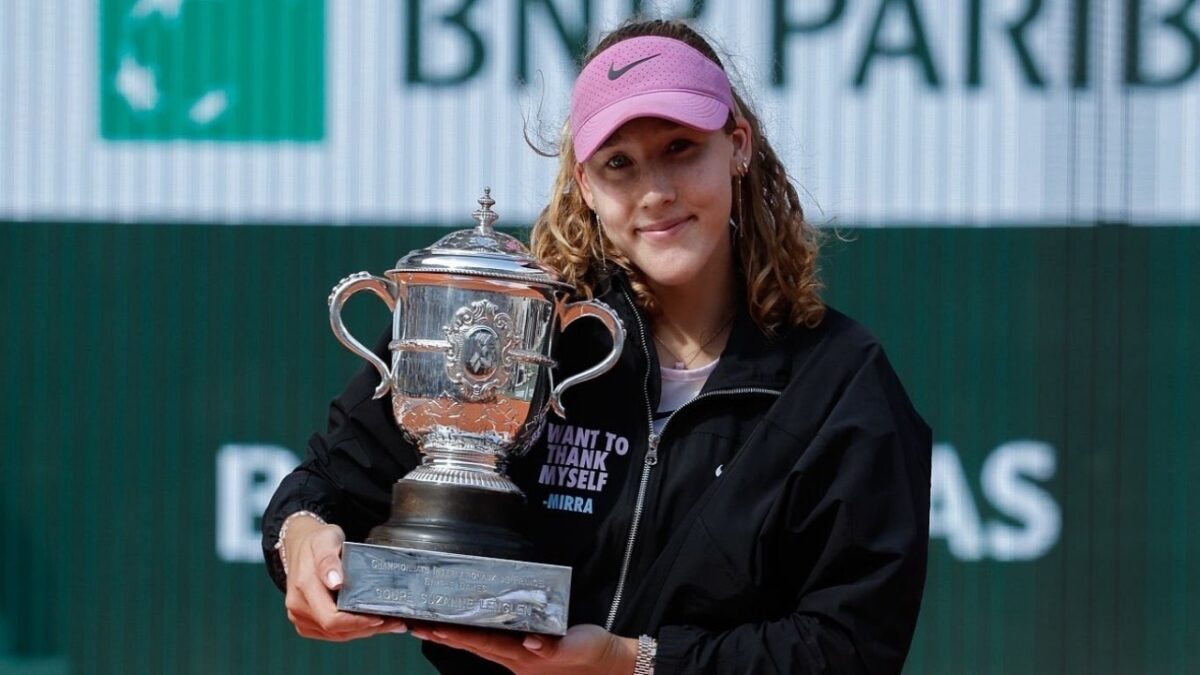
In the final against Chwalinska, Andreeva faced immense pressure in the opening set’s critical moments, yet she consistently played her best tennis when the stakes were highest, breaking her opponent’s serve at key junctures and defending her own baseline with relentless intensity. Statistically, Andreeva’s tournament numbers paint a picture of utter dominance.
Over her seven matches in Paris, she won an astonishing percentage of her return points, consistently neutralizing the biggest serves in the draw and turning defensive positions into offensive opportunities.
Her ability to slide effortlessly on the clay allowed her to extend rallies that would have ended against almost any other player on tour, wearing down her opponents both physically and mentally. This physical resilience, combined with a delicate drop shot and an improved first serve, made her an unsolvable puzzle for Chwalinska in the championship match.
Historical context: A feat not seen since Monica Seles
To truly understand the magnitude of what Andreeva accomplished on the Parisian clay, one must look at the history books. Not since the legendary Maria Sharapova won in 2014 has a Russian conquered Roland Garros with such poise and authority.
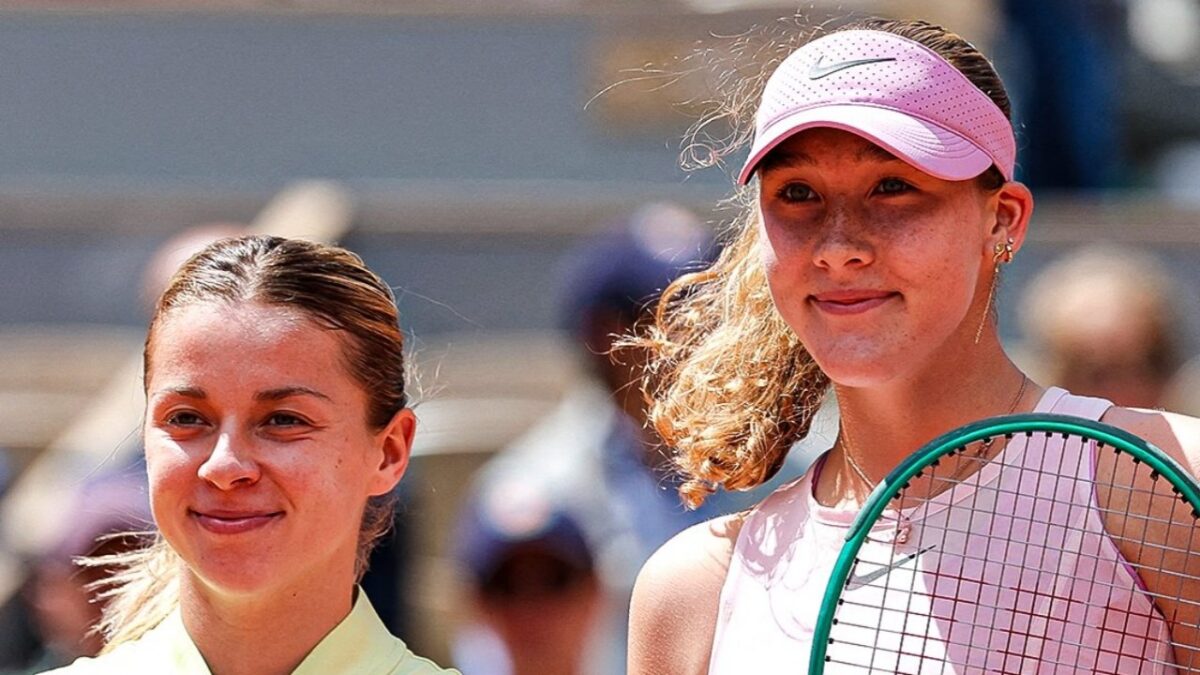
For the past three decades, many teenage prodigies have arrived in Paris with high expectations, only to crumble under the immense media scrutiny and the physical demands of three-set clay-court grinds. Andreeva, however, embraced the pressure, treating the Philippe Chatrier center court like her own backyard.
With the clay-court season now officially in the rearview mirror, the tennis world shifts its focus entirely to the brief but prestigious grass-court swing, culminating at the All England Club. The transition from the slow, high-bouncing clay of Roland Garros to the lightning-fast, low-skidding grass of Wimbledon is widely regarded as the most difficult surface change in all of professional sports. It requires an entirely different set of footwork patterns, shorter backswings, a greater emphasis on first-strike tennis, and an instinctual willingness to move toward the net.
Also Read: Juan Carlos Ferrero Drops Bomb On Carlos Alcaraz-Jannik Sinner Rivalry: “They Compete in Details”
Fahad Hamid
(1769 Articles Published)