


Novak Djokovic Drops Cultural Bombshell After Controversial Move Out of Serbia: “I Feel Greek”
Novak Djokovic recently withdrew from the ATP Qatar Open.
 Follow Us
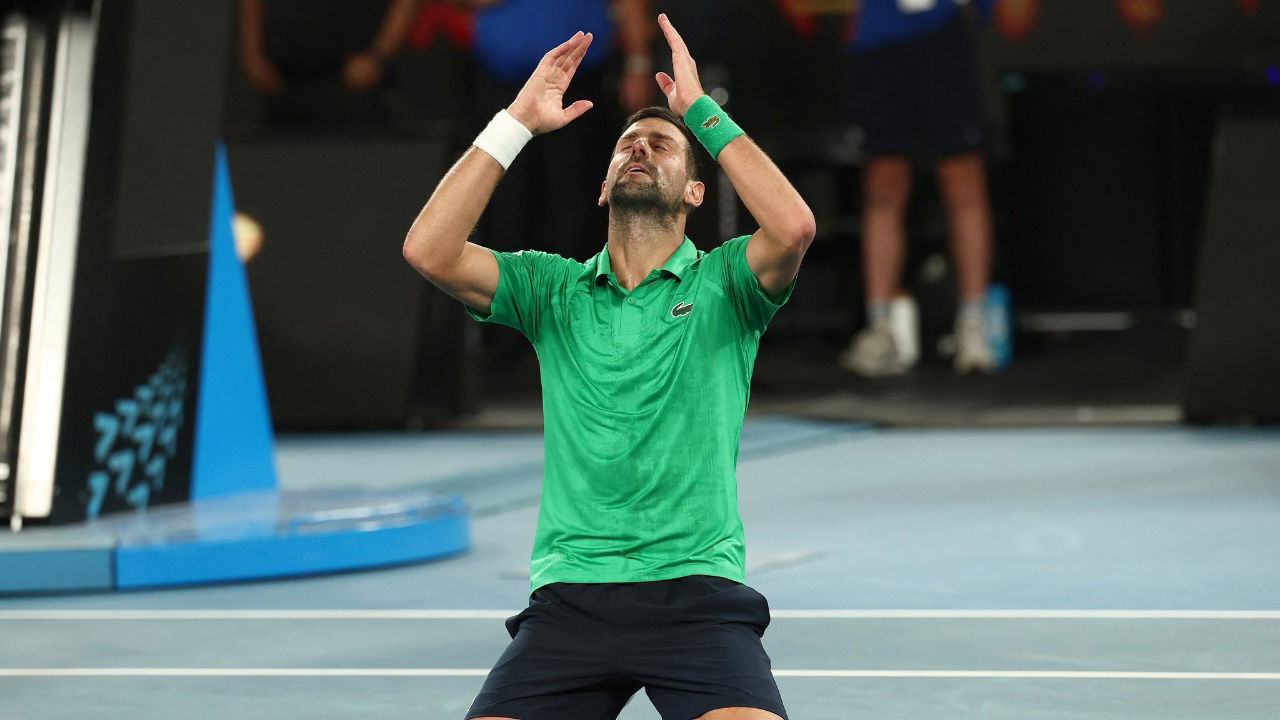
Novak Djokovic (via Australian Open)
- Novak Djokovic expressed a deep connection to Greek culture, stating, "I feel Greek."
- He has frequently vacationed in Greece and built ties with Greek athletes over the years.
- Djokovic's comments have sparked mixed reactions among Serbian fans, balancing pride and concern over his cultural affiliation.
The Peace and Friendship Stadium in Athens was already shaking. There is the EuroLeague atmosphere, the chanting, the sea of red and white. But then, sitting right there courtside, was arguably the greatest tennis player of all time, soaking it all in.
Novak Djokovic didn’t just show up to watch some hoops between Olympiacos and Red Star Belgrade. He showed up to make a statement that’s got the whole Balkan sports world buzzing. In a moment that felt less like a media soundbite and more like a confession among friends, the Serbian legend admitted he “feels Greek.” Djokovic said:
I feel Greek, but I still have to learn Greek. I’m not very good at the language yet — it’s not easy.
It was a candid moment. The fans are used to seeing Djokovic the machine, the guy who stares down match points at Grand Slams without blinking. Seeing Djokovic the fan, admitting he’s struggling with a new language while vibing in a basketball arena, felt refreshingly human.
Djokovic was last seen playing at the Australian Open, where he narrowly lost the final against Carlos Alcaraz. He has withdrawn from the Qatar Open.
Why this hit different
The fans have seen athletes profess love for other countries before. Usually, it’s PR fluff—saying they love the food or the beaches.
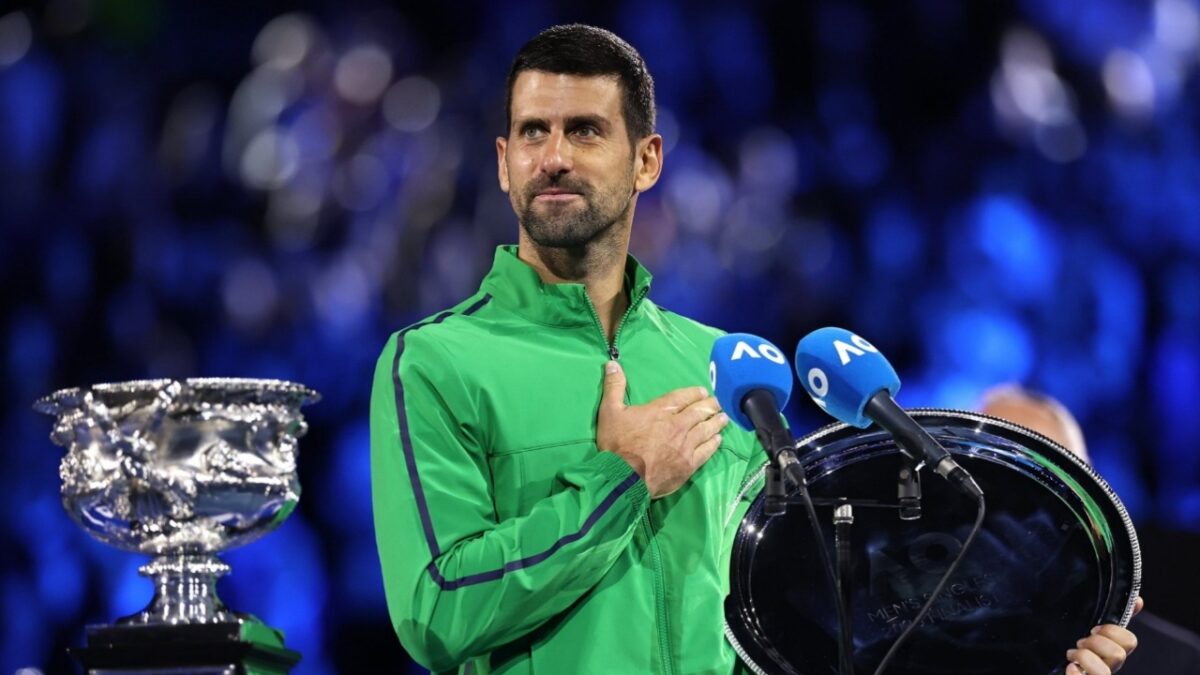
With Novak Djokovic, this feels deeper. He’s spent years building ties here. He vacations in Greece constantly. He’s close with Greek athletes. But explicitly saying he identifies with the culture is a step further than just being a frequent flyer. He added:
There are many historical, religious, social, and cultural ties between Greece and Serbia that are a big reason why I am here. Also, the weather and the food are incredible, and the coast is one of the most beautiful. I like the lifestyle and I really feel that the Greek and Serbian people are like brothers. That is the biggest reason.
For Greek fans, this is the ultimate validation. Having the 24-time Grand Slam champion claim a piece of your identity is a badge of honor. For Serbian fans, the reaction is a bit more complex. Djokovic is practically a deity in Serbia.
While most see this as him strengthening the bond between two friendly nations, there’s always that protective layer of fandom that gets twitchy when their hero starts claiming allegiance elsewhere. But given the history between the two clubs playing that night, it mostly felt like an extension of that existing brotherhood.
What’s next for Novak Djokovic?
So, is Novak Djokovic trading the racket for a Rosetta Stone? Maybe. He hinted that learning the language properly is on his to-do list. But for now, his main focus remains pretty standard for a guy in his late 30s still dominating the tour.
If he does manage to pick up the language, expect his popularity in Greece—which is already sky-high—to go stratospheric. For now, though, the fans are left with the image of Djokovic in Athens, surrounded by screaming fans, watching his childhood team play their “brothers,” and looking like he’s exactly where he belongs.
He has felt the love of Athens already. He concluded the 2025 season with a title win in Greece, which was the first in this country. He beat Lorenzo Musetti in three sets to secure his 101st career title.
Also Read: Tallon Griekspoor and Jesper de Jong Feud Threatens to Tear Dutch Tennis Apart at the Davis Cup



/techfirstnow/media/agency_attachments/kATjCXskQdJKkXN0OuqW.png)