


Whoop CEO Strikes Back at Australian Open With Discreet Sensors Amid Tech Ban
Aryna Sabalenka, Carlos Alcaraz and Jannik Sinner have been told to remove the WHOOP equipment before their matches.
 Follow Us

Carlos Alcaraz (Image via X/Carlos Alcaraz 4K)
🔍 Explore this post with:
Imagine being in the middle of one of the biggest tennis tournaments, only to have an official walk up and demand that the player strip off a piece of gear they’ve worn every single day for training. That’s exactly the chaotic scene that unfolded at Melbourne Park during the Australian Open, sparking a global debate about where we draw the line between tradition and innovation.
Top-tier stars like Carlos Alcaraz and Aryna Sabalenka were caught in the crossfire, told to remove their Whoop straps mid-tournament. But if officials thought the tech company would go down quietly, they were mistaken. In a move that felt equal parts spy novel and marketing genius, Whoop CEO Will Ahmed decided that if the wristbands had to go, the tech would just have to go undercover. He said on X:
UPDATE: We are overnighting our Whoop Body collection to all the tennis players at the Australian Open. The sensor can be worn discreetly and effectively in our new undergarments. It’s going to take a strip search to keep @whoop off the court!!!
Instead of engaging in a long, drawn-out legal battle that wouldn’t help players in the current tournament, the Whoop CEO took a more guerrilla approach. Will Ahmed publicly criticized the ban’s inconsistency, but his actions spoke louder than his words.
UPDATE: We are overnighting our Whoop Body collection to all the tennis players at the Australian Open. The sensor can be worn discreetly and effectively in our new undergarments. It’s going to take a strip search to keep @whoop off the court!!! pic.twitter.com/PZb6bzly1X
— Will Ahmed (@willahmed) January 28, 2026
His team immediately began shipping “Any-Wear” apparel to the athletes in Melbourne. This line of clothing features discreet, sensor-embedded pockets in sleeves and underwear, allowing the Whoop sensor to track biometric data without being visible on the wrist.
By moving the sensor off the wrist and hiding it under the uniform, Ahmed effectively bypassed the visual enforcement of the ban while ensuring his sponsored athletes could still access their health data.
The spark that lit the controversy
It all started smoothly enough. Players were wearing their devices during the first week of the tournament without incident. But as the competition heated up in the second week, Tennis Australia officials suddenly clamped down. They cited Grand Slam rules, which—unlike the wider ATP and WTA tours—can be notoriously strict and independent.
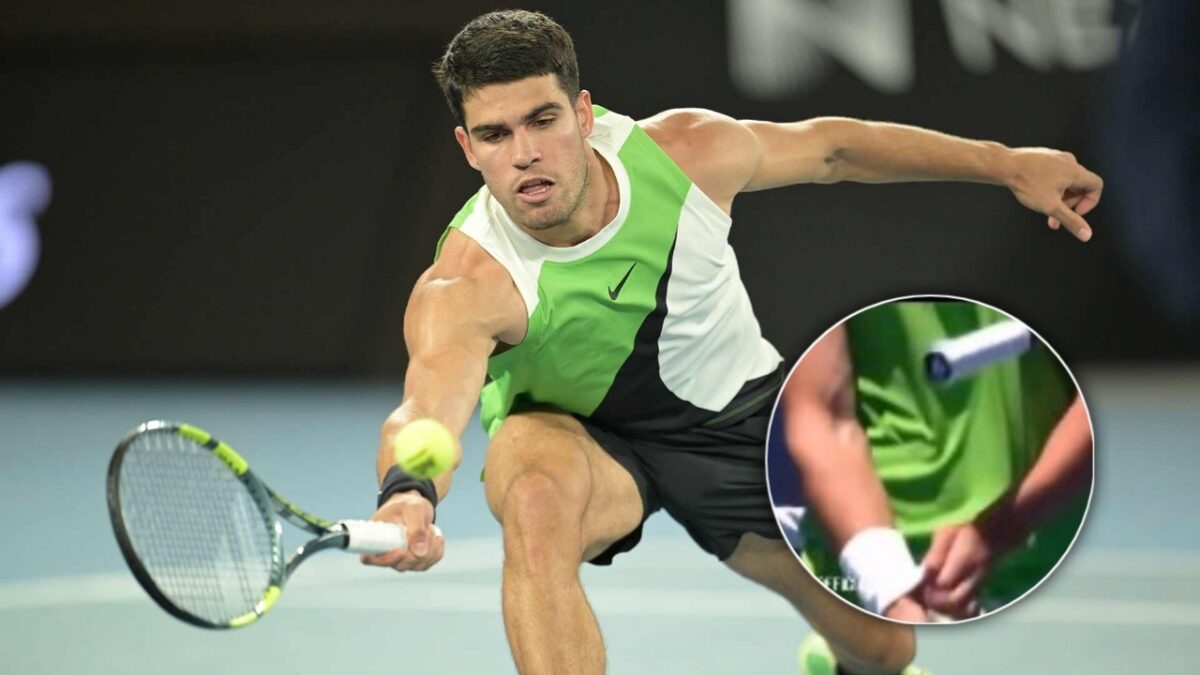
The confusion was palpable. The International Tennis Federation (ITF) had previously given the green light to Whoop devices under its Player Analysis Technology guidelines. So, when players were told to take them off, it wasn’t just annoying; it was contradictory.
Aryna Sabalenka didn’t hold back her frustration, pointing out the obvious: “It’s just for tracking my health. I don’t understand why Grand Slams are not allowing us to wear them.” For these athletes, biometric data isn’t a cheat code; it’s a way to monitor recovery, sleep, and strain to prevent injury.
What comes next for wearables in Tennis?
The fallout from the Australian Open ban has accelerated conversations that were long overdue. The immediate impact was negative—players lost access to health monitoring during a physically punishing event. However, the broader implications might actually push the sport forward.

Tennis Australia has already admitted they are involved in “ongoing discussions” about how the rules could change. Furthermore, the organization isn’t anti-tech in principle; its venture arm, AO Ventures, recently invested $40 million in sports tech startups.
As for Will Ahmed, he has positioned himself and his company as the defenders of athlete rights. The argument is simple: athletes should own their body data and be allowed to collect it.
This clash at Melbourne Park proved that sports governance can’t simply ignore the wearable revolution. As technology becomes smaller and more integrated into clothing, banning a wristband is a temporary, band-aid solution. For now, the ball is in the court of the Grand Slam officials to modernize their rulebooks before the technology completely outpaces them.



/techfirstnow/media/agency_attachments/kATjCXskQdJKkXN0OuqW.png)