

Joao Fonseca Reflects on Unique Conditions in Munich – “My Hands Were Freezing”
Joao Fonseca is seeking a second ATP 500 event of his career.
 Follow Us
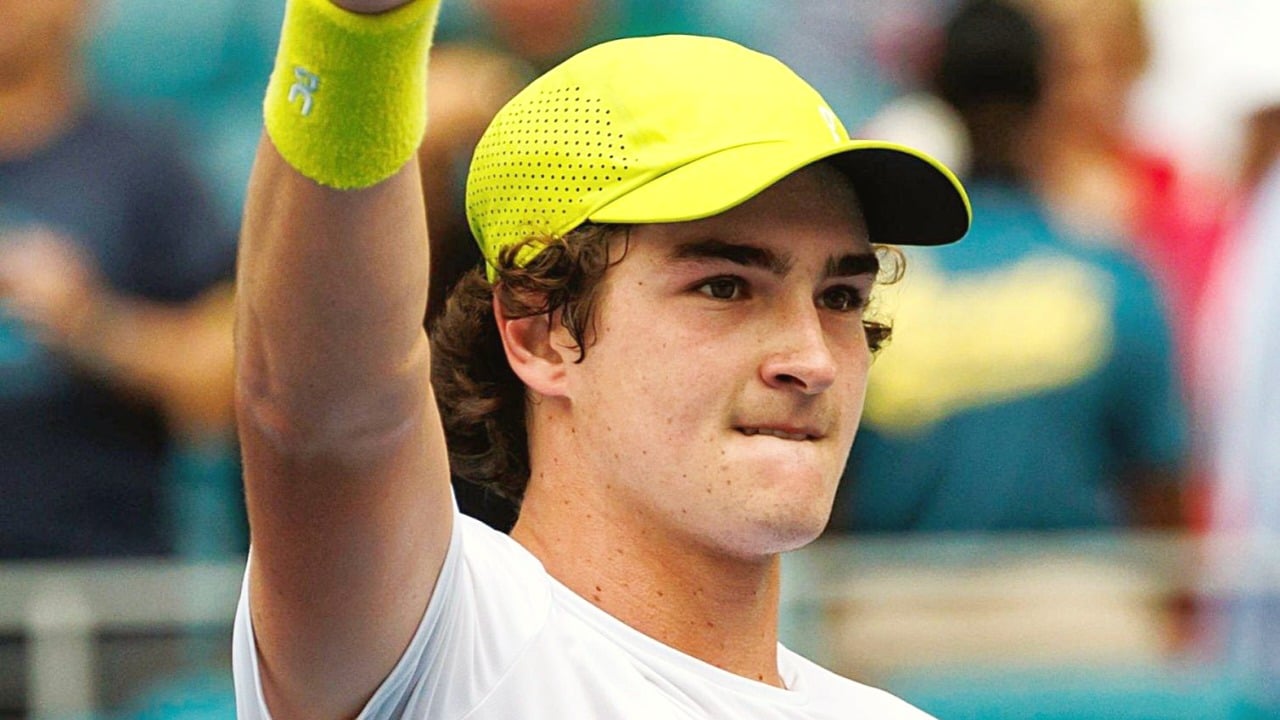
Joao Fonseca (Image via X/Joao Fonseca Updates)
- Joao Fonseca won his opening match at the 2026 Munich Open against Alejandro Tabilo, overcoming freezing temperatures.
- The 19-year-old demonstrated adaptability, transitioning from warm conditions in Monte Carlo to the chilly, high-altitude clay of Germany.
- Fonseca's victory boosts his ATP ranking to No. 31, enhancing his chances for a seeded spot at the upcoming French Open.
Brazilian rising star Joao Fonseca secured a pivotal opening-round victory at the 2026 Munich Open despite battling brutal weather conditions, with Tennishead reporting that the teenager overcame a frozen grip to defeat Alejandro Tabilo 7-6, 6-3.
The impressive straight-sets victory serves as a crucial measuring stick for the 19-year-old’s ability to handle extreme environmental shifts on the ATP Tour. Adjusting from the sun-drenched, sea-level courts of the Monte Carlo Masters just days prior to the chilly, high-altitude clay of Germany requires a veteran level of adaptability, something the young phenom is proving he possesses in spades.
During his post-match availability, the news was clearly attributed to Fonseca’s candid honesty about the stark contrast in climate. The South American standout admitted that the freezing temperatures nearly compromised his ability to feel the racket, turning what is normally a standard baseline battle into an exercise in pure survival.
It was a little bit cold, so I needed a good warm-up to stay alive in this match. Even in the breaks, my hand was freezing, but I’m happy with the fight today. I mean, that’s tennis. Every week is a different surface, different type of clay, altitude here, different weather. You need to adapt, you have one or two days to adapt, and yeah, that’s tennis. Whoever adapts better is going to have better results.
That fight was evident from the very first ball. The opening set was a grueling, back-and-forth affair that ultimately required a tiebreaker to separate the two South Americans. Tabilo, a seasoned competitor who knows his way around a clay court, kept the pressure on early. But as the match progressed, Fonseca’s elite return game began to neutralize Tabilo’s altitude-assisted serve.
DEDOS CONGELANDO! Em entrevista exclusiva à ESPN após estrear com vitória no ATP 500 de Munique, João Fonseca falou das dificuldades que sentiu ao sair do calor de Monte Carlo para pegar 8ºC durante sua estreia na Alemanha e revelou que seus dedos estavam "quase congelando" no… pic.twitter.com/0iUjkSvWAY
— ESPN Brasil (@ESPNBrasil) April 14, 2026
The match statistics paint a picture of a player finding his rhythm in real time. Fonseca managed a solid 65% first-serve percentage, winning 72% of those points. More importantly, he protected his second serve brilliantly, winning 64% of those opportunities, compared to Tabilo’s dismal 43%. The teenager also generated seven break-point chances, converting three, while limiting his opponent to just a single break.
A rollercoaster 2026 season
To understand the weight of this victory, the fans have to look at the broader context of Joao Fonseca’s turbulent 2026 campaign. Billed as one of the sport’s most electric young talents, the Brazilian actually stumbled out of the gates this year. Back-to-back opening-round losses at the Australian Open and the Argentina Open had some pundits questioning if the teenager was hitting a sophomore slump.
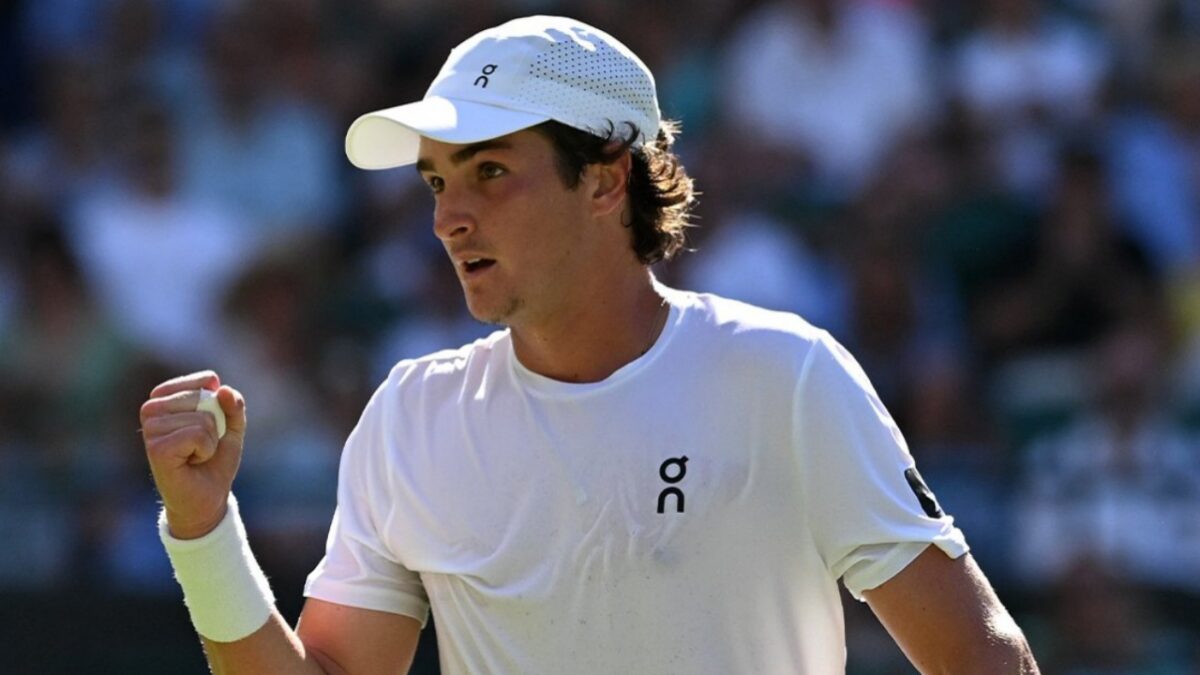
But tennis is a sport of short memories and quick turnarounds. Since a frustrating loss to Ignacio Buse in Rio, Fonseca has been playing with his hair on fire.
He strung together statement wins at Indian Wells, taking out established names like Karen Khachanov and Tommy Paul before finally bowing out to World No. 1 Jannik Sinner. He followed that up with a dazzling run to the quarterfinals in Monte Carlo, dismissing Matteo Berrettini and Arthur Rinderknech before falling to Alexander Zverev.
That recent surge has catapulted him up the live ATP rankings to No. 31, placing him within striking distance of a seeded spot at the upcoming French Open. Beating a tricky opponent like Tabilo in conditions that felt more suited for a hockey game than a tennis match only solidifies his status as a legitimate threat on the dirt.
The art of adaptation on the ATP Tour
When asked by reporters if the dramatic shift in weather from Monaco to Munich threw him off his game, Joao Fonseca offered a response that sounded like it came from a ten-year tour veteran rather than a teenager.
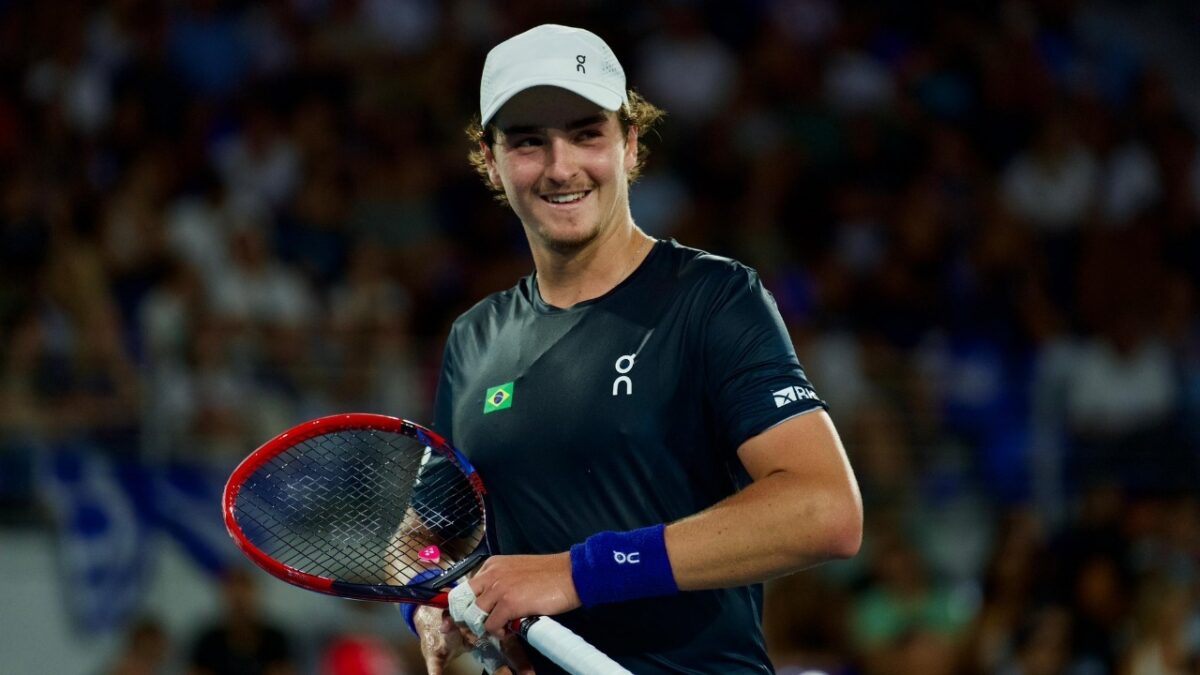
It’s that exact mindset that separates the good players from the great ones. A player can have all the baseline power in the world, but if he mentally checks out the second he can’t feel his fingers on a changeover, he’s going to be booking an early flight home. Fonseca embraced the grind, kept his footwork active to stay warm, and outwrestled a guy who had beaten him twice before.
Looking ahead, Fonseca faces a familiar foe in the second round: Arthur Rinderknech. The two just engaged in a grueling three-set battle in Monte Carlo, which the Brazilian narrowly won 7-5, 4-6, 6-3.
Rinderknech’s massive serve will only be amplified by the Munich altitude, setting the stage for an explosive rematch on Wednesday. If Fonseca can replicate his elite return numbers and keep the blood flowing to his hands, he’s in a prime position to book a ticket to the quarterfinals, and potentially set up a blockbuster showdown with American Ben Shelton.
Also Read: Iga Swiatek Discusses the ‘Honored’ Feeling of Spending Time With Rafael Nadal in his Academy
Fahad Hamid
(1769 Articles Published)