

Former British No.1 Makes Juan Carlos Ferrero Claim Ahead of Carlos Alcaraz’s Awaited US Open Comeback
Carlos Alcaraz returns after 4 months at the US Open.
 Follow Us
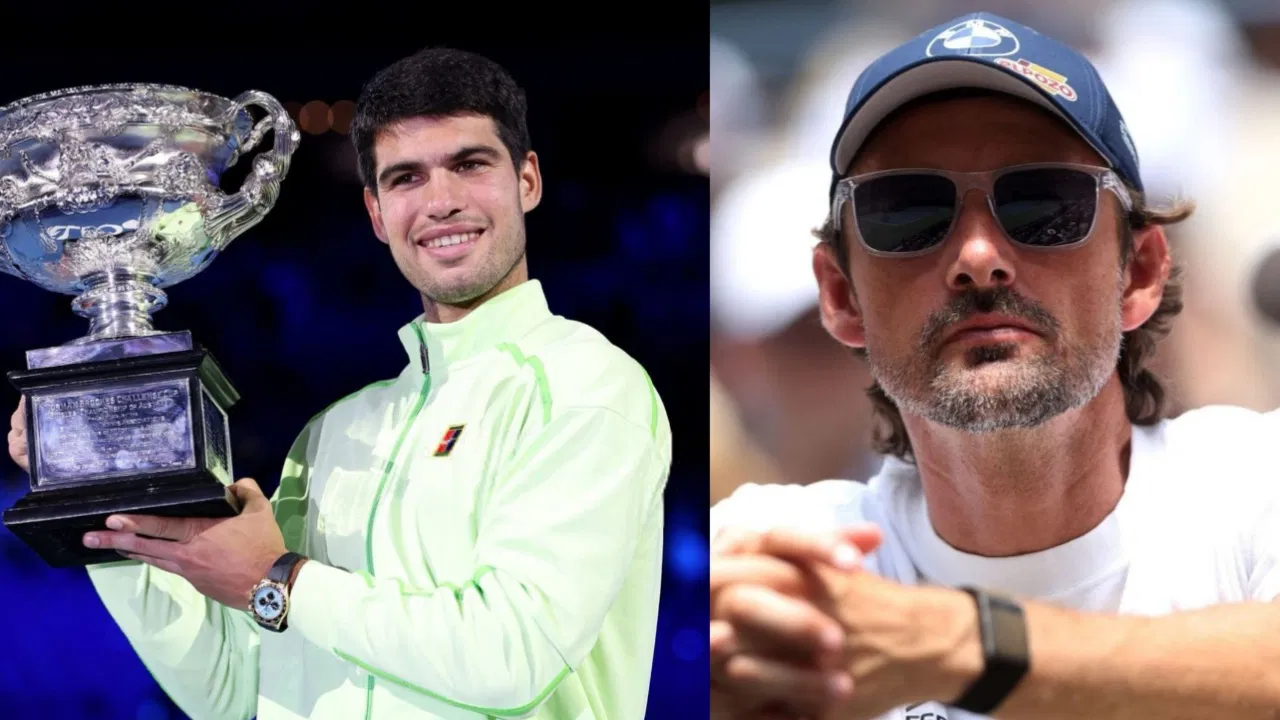
Carlos Alcaraz, Juan Carlos Ferrero (Image via X/Carlos Alcaraz 4K, TENNISCentel)
The tennis world is buzzing following revelations regarding Carlos Alcaraz and a critical turning point in his career management, with former British number one Greg Rusedski shedding light on how close the young Spaniard came to overplaying through severe physical distress.
Fresh discussions have emerged detailing how coach Juan Carlos Ferrero allegedly stepped in to halt Alcaraz from competing at the US Open due to looming injury risks.
Rusedski emphasized that the rigorous demands placed on elite players often necessitate outside intervention by trusted coaching staff.
The former British star noted that Juan Carlos Ferrero recognized the invisible toll that accumulated stress was taking on Alcaraz’s body, prompting a firm protective stance. Rusedski said on Off Court Podcast:
I think it’s a huge risk. I would be very surprised if he plays in the singles. You know, that’s why I think the relationship might have split with Juan Carlos Ferrero because I don’t think he would have allowed him to take this sort of risk if he’s not 100% right. I don’t think he’s thinking about Jannik Sinner being injured because that would make no sense whatsoever. Because health is your wealth. He’s so young. He’s got at least another decade plus if he can stay healthy. So, it’s not because Sinner’s out that he’s rushing to come back.
The professional bond between Alcaraz and Ferrero began when the Spaniard was just 15, forming a foundational alliance that yielded multiple major titles. However, the duo parted ways late last year in a sudden shift that surprised the tennis community, prompting Alcaraz to work with alternative team members and secure titles such as the Australian Open.
Despite subsequent successes, the absence of Ferrero’s specific cautionary oversight became a focal point for critics evaluating the wisdom of an immediate US Open appearance.
Despite warnings from Rusedski and other tour veterans, Alcaraz opted to move forward with his entry, alongside news of other significant draw developments. World number one Jannik Sinner was forced to withdraw from the tournament due to a right knee injury, leaving the men’s singles field wide open.
Preparing for the Flushing Meadows fortnight
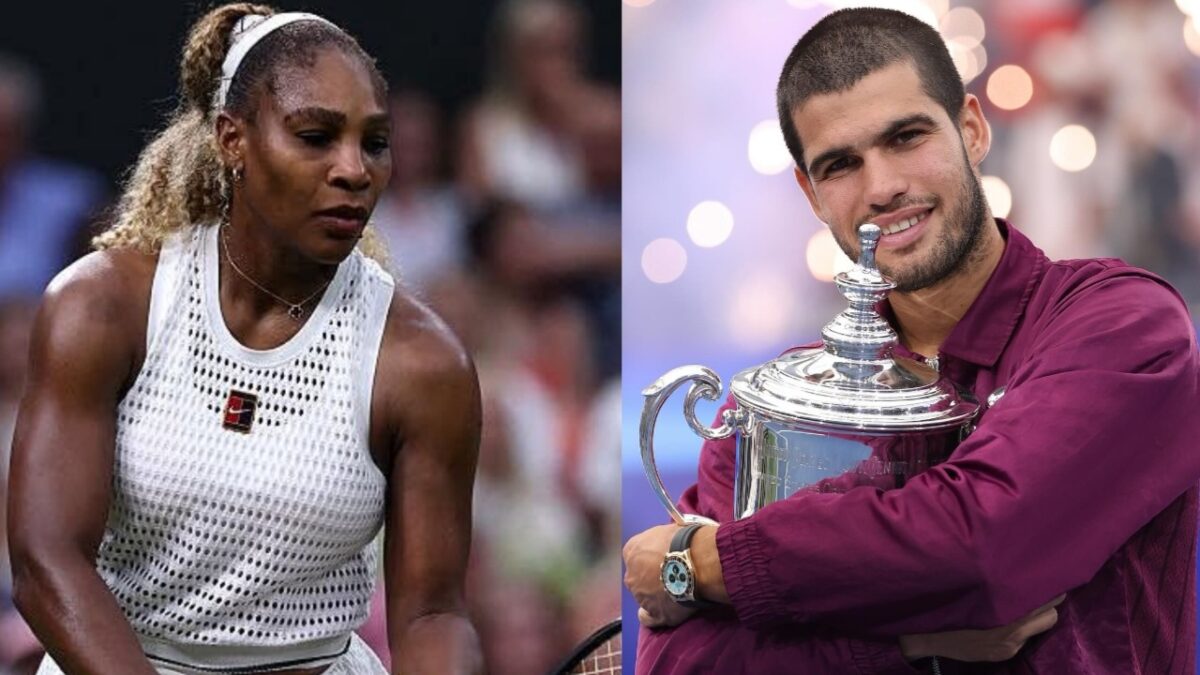
The logistics of Alcaraz’s arrival in New York involve more than just his singles campaign, as official tournament announcements also confirmed a high-profile mixed doubles pairing with Serena Williams for the event. This unexpected partnership adds another layer of physical activity to his schedule, testing the repaired right wrist across multiple match formats.
Balancing doubles commitments with the grueling physical demands of defending a singles title at a major championship will immediately test his recovery.
Medical teams and physical trainers have spent the past several weeks monitoring his practice sessions to ensure the joint can withstand high-velocity groundstrokes. Alcaraz even utilized unconventional recovery methods during his training block in Murcia, reflecting the exhaustive lengths his camp went to in order to accelerate healing. Yet, practice intensity rarely mirrors the sustained pressure and nervous tension of official Grand Slam matches played under evening stadium lights.
The broader implications of this comeback extend to how elite athletes navigate long-term health versus immediate competitive ambitions. Medical historians often point to cautionary examples on the professional tour where rushed returns from joint injuries permanently altered the trajectories of former champions. By choosing to test his body in New York, Alcaraz is accepting a calculated gamble that his rehabilitation protocol has fully stabilized the joint against chronic strain.
The biomechanics of a breakdown
The reality of Carlos Alcaraz’s injury is rooted in his very playstyle. The 23-year-old’s aggressive baseline game is built on extreme physical exertion. His semi-western forehand grip demands a whipping, violent wrist action to generate the massive topspin that kicks up above his opponents’ shoulders. That biomechanical intensity exacts a severe cost, placing unprecedented shear stress on the tendons in his right wrist.
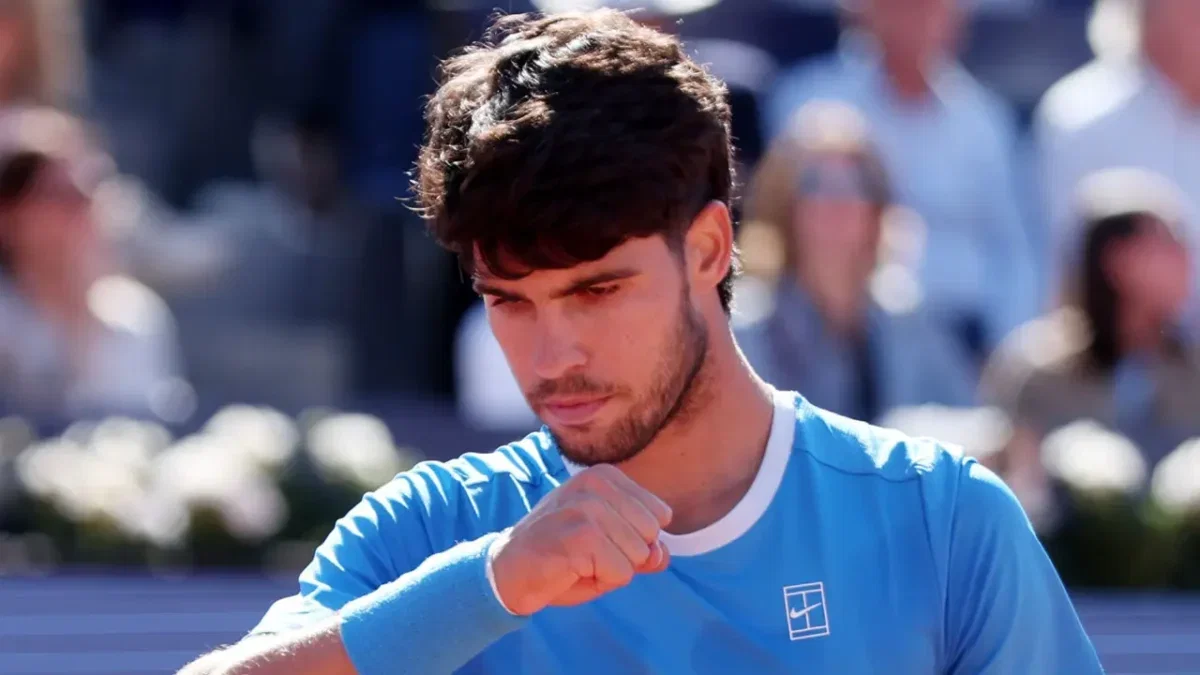
Since April’s Barcelona Open, Alcaraz has been forced to watch from the sidelines. It hasn’t been a minor bump in the road; it has been a systematic shutdown of his season. Prior to his withdrawal from Cincinnati, he pulled out of an agonizing string of premier events. The Madrid Open, the Italian Open, Roland Garros, Queen’s Club, Wimbledon, and the Canadian Open all came and went without the defending US Open champion taking the court.
Rusedski is acutely aware of how quickly a joint issue can derail a promising career, noting the delicate nature of tendons expected to withstand the sheer violence of the modern game. Rushing back before the joint can fully handle the load risks permanent structural damage.
The wrist must be completely stable to execute the defensive slide-and-flick shots that define Alcaraz’s highlight reels. If he compensates by altering his swing mechanics to protect the wrist, he risks injuring his elbow or shoulder in the process.
Also Read: Rennae Stubbs Advises Rafael Jodar to Hire Carlos Alcaraz’s Ex-Coach Juan Carlos Ferrero
Fahad Hamid
(1769 Articles Published)