

4 Reasons Why Vaibhav Sooryavanshi Shouldn’t Be Rushed Into International Cricket
Vaibhav Sooryavanshi, at just 15, is regarded as one of India’s brightest young batting talents, grabbing national attention with record-breaking performances in the IPL.
 Follow Us
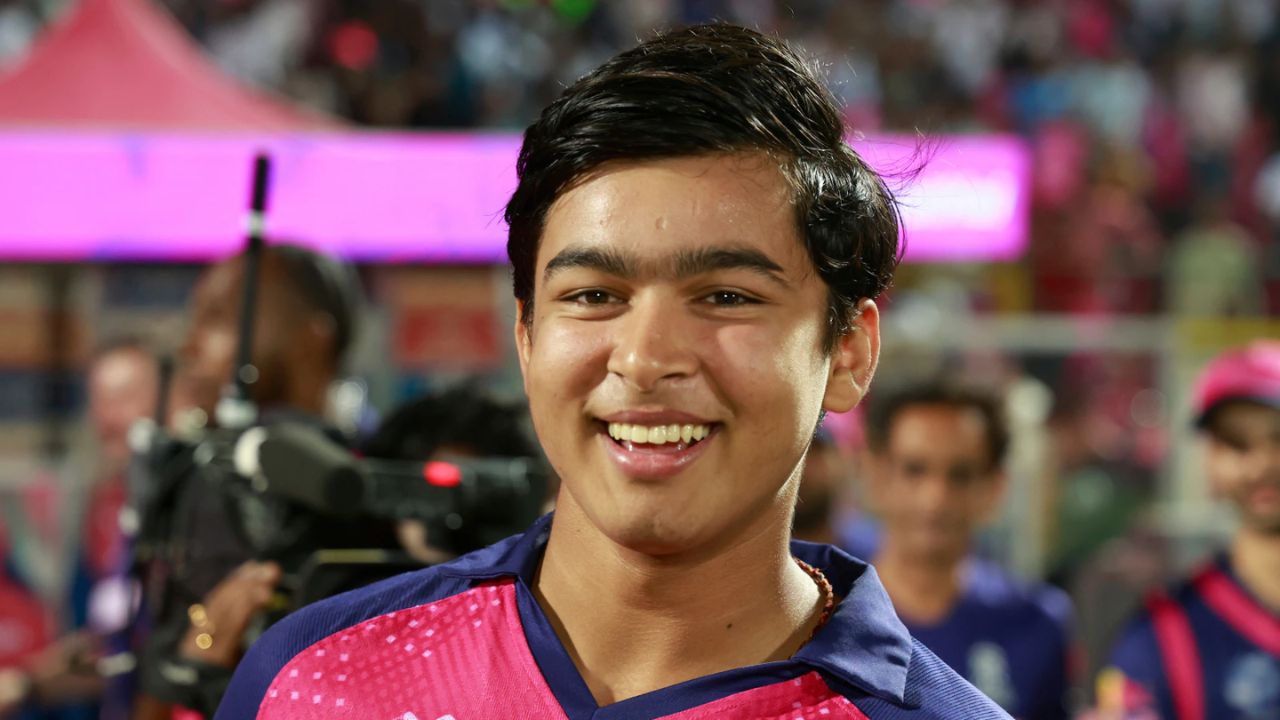
Vaibhav Sooryavanshi (Image via BCCI)
15-year-old Vaibhav Sooryavanshi has emerged as one of the main talking points out of a generally narrative-less IPL 2026.
The teenager has stunned the cricketing world with his surreal, seemingly effortless hitting. It has been hard to keep track of the records he has smashed since his IPL debut in 2025.
From being the youngest-ever T20 centurion to hitting two 15-ball fifties to becoming the first player to hit 100 T20 sixes before turning 20 – he practically sets a new youngest or fastest record every time he steps on to the crease.
This is in addition to his heroics in the 2026 Under-19 World Cup, where he smashed 175 off 80 balls in the final to help India to a tournament win.
He has been fearless against the likes of Jasprit Bumrah and Josh Hazelwood and has earned praise from Pat Cummins and Jos Buttler–the latter even wondering if Vaibhav is an AI creation.
With so much buzz around him, it is only a matter of time before Vaibhav gets to make his India debut. A number of ex-cricketers have called for his inclusion in the national team, and there are reports that he would be in the squad for the tour of Ireland in June 2026.
There are already comparisons between Vaibhav and the batting legend Sachin Tendulkar, who made his international debut as a 16-year-old in 1989.
However, would an international debut at the age of 15 be the best thing for Vaibhav Sooryavanshi’s cricketing career?
Here we examine why he should be handled carefully and why his international debut should not be rushed.
IPL does not equal international cricket
Vaibhav Sooryavanshi has smashed sixes against almost all the top international bowlers he has faced over the IPL 2025 and 2026 -Bumrah, Hazelwood, Arshdeep Singh, Bhuvneshwar Kumar, Lockie Ferguson, Marco Jansen – the list goes on.
However, it should be noted that he has faced only a couple of overs from these bowlers at best.
Up to 29th April 2026, he had faced Bumrah for 5 balls, Hazelwood for 4, Rabada for 8, Arshdeep for 13 and Bhuvneshwar for 19. He has maintained a terrific strike rate against these bowlers, but the sample size is too small to suggest how good or bad he would be against them over a prolonged period.
Added to this is the fact that the 2026 IPL in particular has been a complete run fest with little contest between bat and ball. A score of even 200 is considered below par, and 240+ chases have become routine thanks to short boundaries, flat wickets and the Impact Player rule.
It is debatable whether the top fast bowlers would want to exert too much in the 2026 IPL batting-paradise given that they have already played in important international matches earlier in the year.
The Australian trio of Starc, Hazelwood and Cummins are playing after a long break following the 2025-26 Ashes, while Bumrah and Arshdeep had a grueling but successful 2026 T20 World Cup campaign prior to the IPL.
So, it is reasonable to think that the 2026 IPL is not a reliable index of how Sooryavanshi would fare in actual international cricket.
International cricket is ruthless
Think of the number of times Virat Kohli has been caught edged to slips or wicketkeeper in Test matches. International teams caught weaknesses in Kohli’s game outside the off-stump and ruthlessly exploited them, effectively contributing to a decline in Kohli’s Test career.
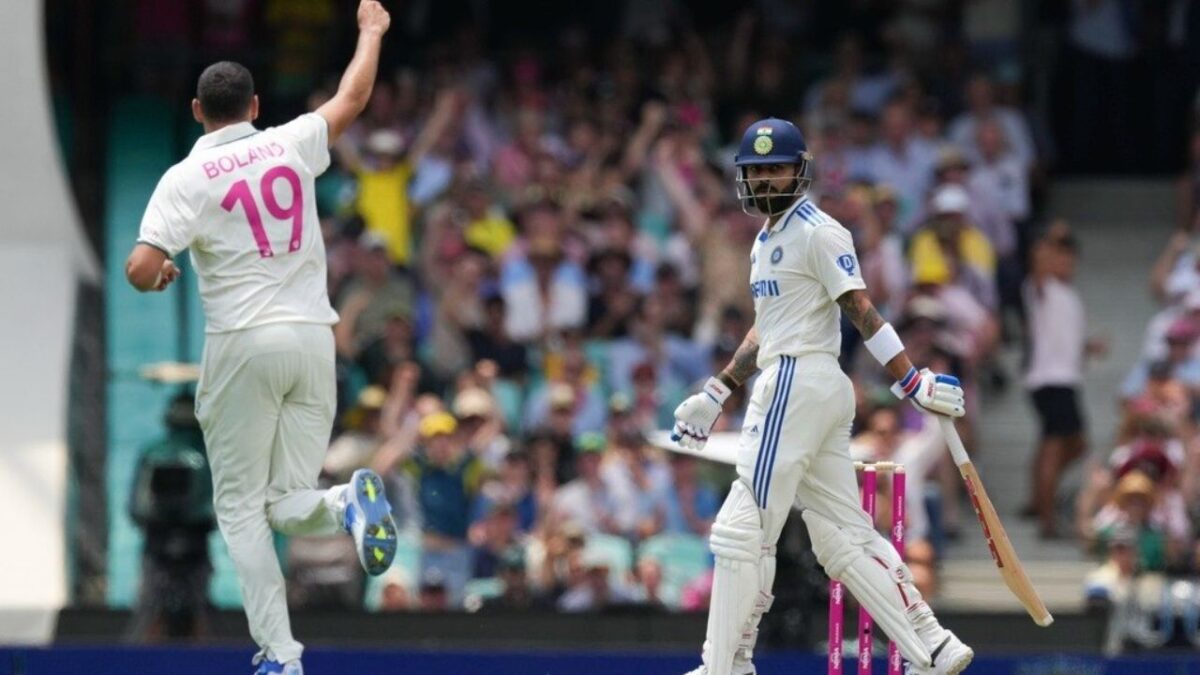
With advanced data and video analysis tools available to every international team, every player gets microscopically analyzed for strengths and weaknesses.
A hyped player like Vaibhav will especially be on the radar for not just technical weaknesses but also for sledging by opposing players and fans. Kyle Jamieson’s fiery send-off is just a taste of what Vaibhav can expect in international cricket.
Talent alone is not enough to survive in international cricket – ask Prithvi Shaw or Vinod Kambli. To succeed, Vaibhav, with his coaches, will have to adapt and evolve his technique to stay competitive. He will need to develop discipline, determination, hunger, equanimity, and composure among other attributes to succeed.
To complicate matters, the present Indian team management, despite the success in the recent T20 World Cup, has not managed to groom young batsmen for Test cricket, the format which makes or breaks a player’s reputation and the one which SENA teams take the most serious.
First-class cricket matters
There have been a number of admired ODI and T20 specialists, Michael Bevan and Yuvraj Singh for example, but if a player has to enter the GOAT discussions, he has to succeed in Test cricket. Vaibhav’s father and coach seem to think the same.
All the best ODI and T20 specialists in history, including Bevan and Yuvraj, had a good first-class record. Somewhat like how a successful playback singer has to be good at classical singing, a good cricketer, even a T20 specialist, has to be good in first-class cricket.
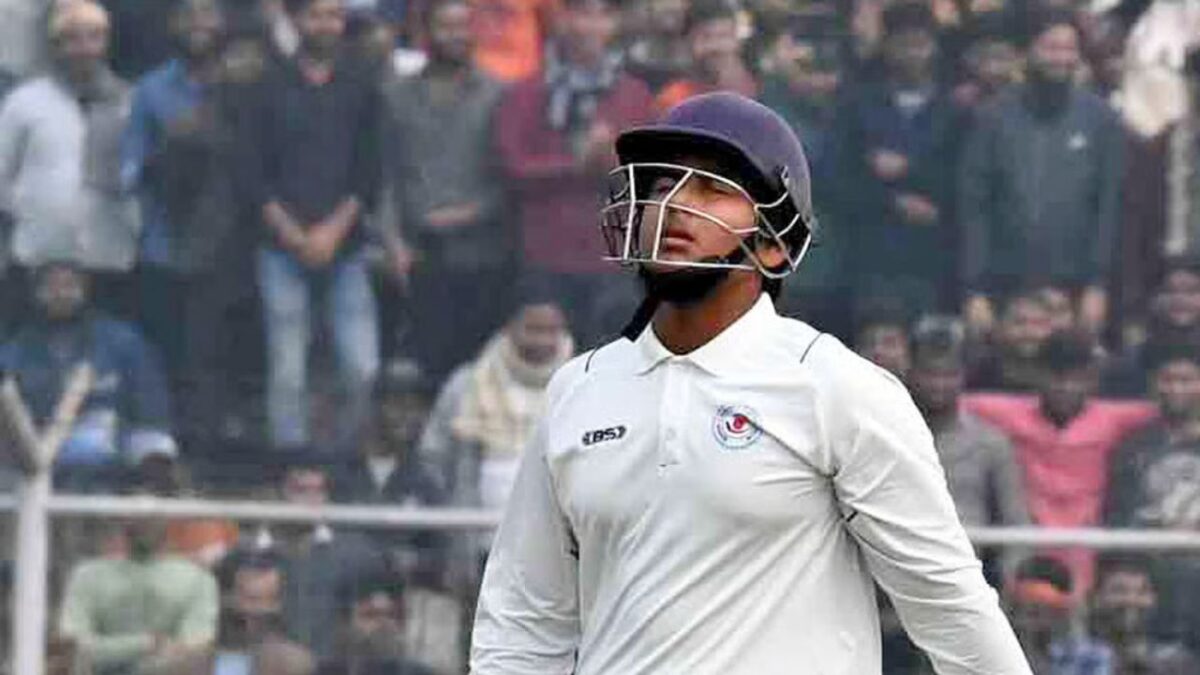
It is only in the longest format that a player develops technique, temperament and the ability to face various conditions – whether flat pitches or seaming or spinning tracks-against experienced bowlers. It is these skills that can hold a player in good stead, for example, while playing a T20 or ODI World Cup knock-out game in a green swinging track.
Vaibhav is being looked upon as a future all-format great, not just a T20 specialist. His first-class record at present reads 207 runs from 8 matches and 12 innings at an average of 17.25 and a highest score of 93. He also plays in the lower-tier Plate Division of the Ranji Trophy, where he does not get to face the country’s best bowlers regularly.
Sachin Tendulkar, by contrast, against whom Vaibhav and every teenage batting prodigy in India is compared to, scored a century in each of his Ranji, Duleep and Irani trophy debuts.
Vaibhav and Sachin need not have the same path to success, but it is inarguable that to do well in international cricket, the youngster needs more exposure to the first-class game.
The curse of social media
International cricket can be ruthless. Add to that the brutal nature of social media. Every success may mean he is the second-coming of Don Bradman. Every failure or mistake can make him a subject of cruel trolling, abuse or memes.
Effigy-burning can always make a comeback ‘irl’. To the die-hard fans and trolls alike, it does not really matter if a player is a 15-year-old from a small town. Vaibhav is in the formative phase of his life, and his mental health needs will be different from an older cricketer.
Indian cricketers in general need to have a thick skin, but it is unknown whether a teenager like Vaibhav has the right support-system to help him cope with the mood-swings of a passionate fandom.
In conclusion
Vaibhav, with his elite hand-eye co-ordination, confidence and fearlessness is one of the most exciting batting talents to emerge from India.
But whether he is physically and mentally ready to deal with the rigors of international cricket, and that too under the present coaching set-up, is a question the BCCI and selectors need to ponder over very carefully.
Read More:
Niyati
(89 Articles Published)